2nd Inha × Waseda Joint Research Workshop
2nd Inha × Waseda Joint Research Workshop 🌏
The Inha–Waseda collaboration returned for its second edition — this time hosted at Waseda University in Tokyo, with faculty and graduate students from both universities spending two days presenting their work and building the connections that make a joint research program more than a memorandum.
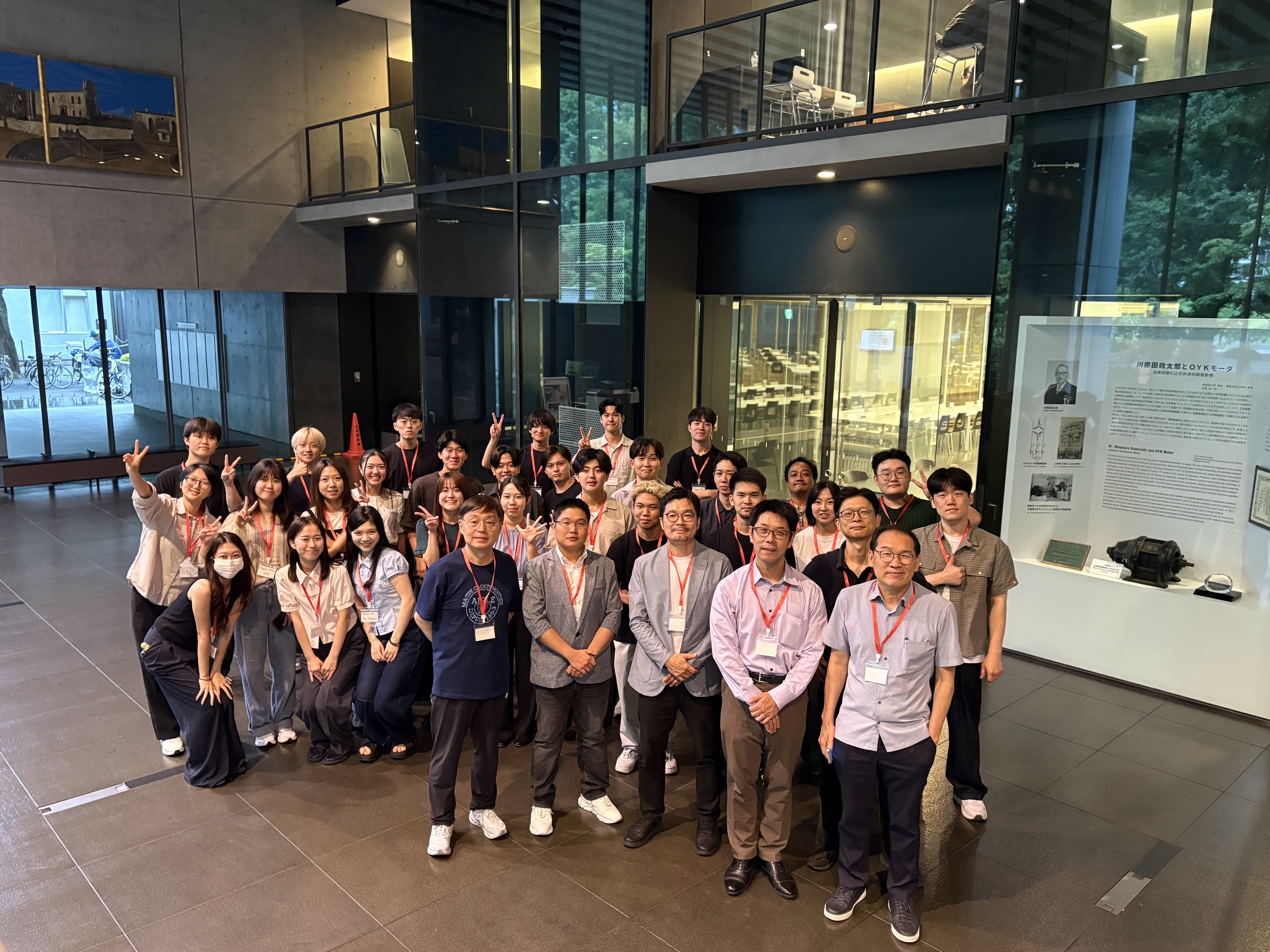
A year on from the first workshop in Seoul, the two groups met again — this time on Waseda’s home ground. Reciprocal hosting is a small detail that says something real about a collaboration: the first edition could have been a one-off, and the second is what makes it a series.
Joint principal investigators
Prof. HASHIMOTO Kenji
Waseda University, Tokyo, Japan
Prof. Hyundon Shin
Department of Energy Resources Engineering,
Inha University · CURE Lab
The workshop is run as a genuinely joint program rather than a visit — two principal investigators, one on each side, sharing responsibility for the agenda and for what the collaboration is supposed to produce.
The series so far
1st Edition · September 11–12, 2025
Seoul, Korea
Hosted by Prof. Hyundon Shin. Two days of presentations spanning CO₂ storage, subsurface hydrogen storage, geomechanics and AI-driven subsurface modeling, with invited speakers from Canada, China and Japan joining the student sessions.
2nd Edition · August 27–28, 2026
Tokyo, Japan
Hosted at Waseda University, jointly led by Prof. HASHIMOTO Kenji and Prof. Hyundon Shin — the reciprocal leg, and the point at which an exchange becomes a standing research relationship.
The shared research agenda
Since the first workshop the two groups have been working across a common set of subsurface energy problems — the ground on which the joint program is built.
CO₂ storage
Capacity assessment, plume behaviour and long-term containment in saline aquifers and depleted reservoirs.
Subsurface hydrogen storage
Storing hydrogen underground at scale — a different fluid, and a different set of containment and cycling problems.
Geomechanics
How the rock responds to injection: stress changes, seal integrity and induced deformation.
AI-driven subsurface modeling
Machine learning applied to reservoir characterization, forecasting and uncertainty quantification.
Mostly students, deliberately
👥 Where a collaboration actually lives
Look at the group photo and the majority of the faces are graduate students. That is the point. Faculty agreements establish a collaboration; it survives because students on both sides know each other's work, compare methods over lunch, and end up co-authoring something nobody planned in advance. Two editions in, the Inha–Waseda program has the beginnings of exactly that.
Our thanks to Prof. HASHIMOTO Kenji and everyone at Waseda for hosting the second edition, and to all the students who presented. We are already looking ahead to the third. 🇯🇵 🤝 🇰🇷